
 City Tour
Pyramids of Giza
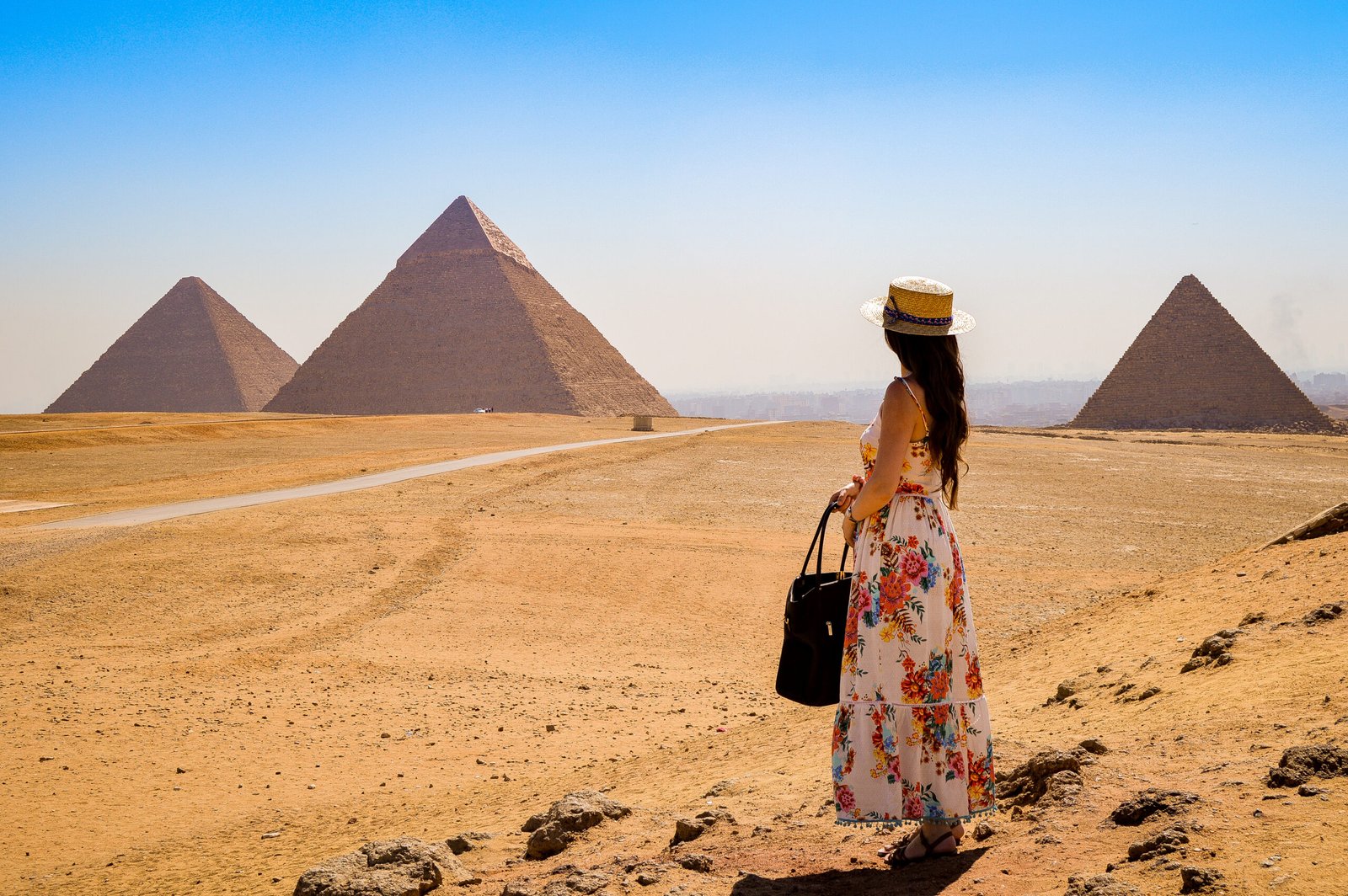
Pyramids of Egypt stand as the most enduring and recognizable testament to the ingenuity and spiritual depth of the Old Kingdom civilization.
Pyramids of Giza Built primarily as colossal tombs for the Pharaohs, such as the famous structures at Giza for Khufu, Khafre, and Menkaure, these monuments are a literal embodiment of the ancient Egyptian quest for immortality.
More than mere feats of engineering, the pyramids carry profound cosmic and religious significance.
Their perfect geometrical shape a square base rising to a single apex is believed to represent the Benben, the primordial mound that first emerged from the chaotic waters of creation (Nun).
Furthermore, their smooth, reflective casing stones (most now gone) were designed to catch the sun’s rays, symbolizing a stairway to heaven a divine ramp that allowed the deceased Pharaoh’s soul (or Ka) to ascend and join the Sun God Ra. These structures are a powerful expression of the Pharaoh’s divine authority and the rigorous, complex social organization required to undertake projects of such immense scale and precision.
The Pyramids of Giza were built to last for eternity, and so they have. These monumental tombs of ancient Egypt’s Old Kingdom were constructed approximately 4,500 years ago.
They stand as the most mysterious of the Seven Wonders of the Ancient World and the only one still in existence, a monumental testament to human ingenuity and ambition. Their enduring allure stems from a unique blend of colossal scale, engineering perfection, and the many secrets they still guard.
The Giza Complex: A Masterpiece of Alignment and Scale
The Giza Necropolis is dominated by three main pyramids and the iconic Sphinx, each embodying the power and religious devotion of the Fourth Dynasty pharaohs. The sheer precision and scale of construction remain a global marvel.

The Great Pyramid of Khufu (Cheops):
Construction dates back to approximately 2560 B.C., built as the tomb for Pharaoh Khufu over a period of about 20 years.
It held the record as the tallest man-made structure in the world for nearly 3,800 years.
Visitors can access the King’s Chamber, which houses the sarcophagus, via a majestic, multi-tiered Grand Gallery, considered a masterpiece of ancient architecture.
The Mystery: The sides of the pyramid are aligned with near-perfect accuracy to the four cardinal points (North, South, East, West), demonstrating an advanced knowledge of astronomy and geometry. The mortar binding the stones is chemically unidentified and incredibly durable.
The Pyramid of Khafre (Chefren):
Built by King Khafre, Khufu’s son. Although slightly shorter than his father’s pyramid, it appears taller because it was constructed on higher ground.
It still retains some of its original casing stones near the apex, offering a glimpse of how all the pyramids once gleamed with polished white limestone.
It measures 215 meters square at the base and has two entrances on the northern side.
The Pyramid of Menkaure (Micerino):
The smallest of the three main pyramids on the Giza Plateau, believed to be the tomb of Pharaoh Menkaure.
The Giza Plateau – More Than Just Three Pyramids:
The complex features nine pyramids in total: the three great ones and six smaller subsidiary pyramids belonging to the queens of Ancient Egypt. Visitors also explore burial shafts, mortuary temples, and the workers’ village.
The Great Sphinx: Father of Terror
Standing near the pyramids, the Great Sphinx, known in Arabic as Abu Al Hol (Father of Terror), is a unique sculpture with the body of a lion and the head of a human (likely portraying Pharaoh Khafre).

Symbolism: This combination of human intellect and leonine strength reflects the courage and power of the pharaohs.
The Mystery: Geological surveys suggest it was likely carved from the bedrock during Khafre’s reign, making it an integral part of his funerary complex. The ancient Greeks gave it the name “Sphinx” because it resembled their mythical winged monster that posed riddles.
Why Were They Built? The Quest for Eternity
These colossal wonders were built for a profound reason: to secure the Pharaoh’s passage into the afterlife, which was central to the ancient Egyptian belief system.
The Reigning Theory (Tomb): Most historians agree the primary purpose was to serve as tombs to preserve the mummies and valuable goods of the pharaohs, ensuring their eternal life according to royal tradition.
The Alternative Theory: Some historical theories, less supported by mainstream archaeology, speculate that their location near the Nile and their geometric properties suggest a use for generating hydroelectric energy or other scientific purposes using natural energy.
Architectural Brilliance: The Enduring Secret
The primary reason for the world’s continued astonishment is the sheer magnitude of the achievement given the tools and resources available 4,500 years ago.
Impossible Logistics: Over 2 million blocks of limestone and granite, some weighing up to 80 tons, were quarried, transported, and perfectly stacked without modern machinery.
The Workers: Forget the Hollywood myth of slave labor. Archaeological findings indicate the pyramids were built by skilled workers who lived in organized, purpose-built villages and were well-fed and paid for their specialized work a monumental effort that unified the ancient Egyptian state.
The Legacy: The construction lasted about 20 years for the Great Pyramid, and the final result is a structurally stable design that has endured centuries of erosion, earthquakes, and the passage of empires.
Beyond Giza: Other Architectural Wonders
The Giza Pyramids are part of a larger tradition of pyramid-building in Egypt, which began centuries earlier.
The Saqqara Pyramid (The Step Pyramid):

Also known as the Step Pyramid of Djoser, located in the Saqqara necropolis.
It is considered the earliest monumental stone structure and consists of six stacked mastabas.
Inside, archaeologists discovered galleries, shafts, royal family mummies, and famous turquoise-and-white ceramics, along with the heavy pink granite slabs that lined the burial chamber.
Saqqara also houses the recently opened Tomb of Mehu (Sixth Dynasty official), whose secluded location preserved its vibrant hieroglyphs from looters.
Dahshur:
Located south of Memphis (the ancient capital), Dahshur was chosen by King Sneferu to build his first pyramid, demonstrating a transition in design.
The Bent Pyramid: Built during Sneferu’s reign, it shows a clear transition from the earlier “step” design. Historians believe the builders realized the initial angle was too steep and quickly changed to a gentler slope for the upper section. It is considered the first pyramid with smooth sides.
The Red Pyramid: Also built by Sneferu, it is recognized as the first “true” smooth-sided pyramid ever constructed, likely serving as the king’s final tomb.
These ancient structures, from the experimental designs in Dahshur to the eternal monuments of Giza, continue to baffle and inspire us. They are not merely stone monuments but enduring symbols of human ambition, engineering genius, and the profound pursuit of immortality.
An Unfinished Legacy of Genius
Today, the Pyramids of Egypt endure not just as ancient ruins, but as the only one of the Seven Wonders of the Ancient World still largely intact. They are a universal symbol of human ambition and capability, yet they continue to hold secrets that challenge modern science.
From their astonishing astronomical alignments to the recently discovered hidden voids and chambers, the pyramids remain a focus of continuous research and intense fascination. They stand as a powerful reminder that the foundational knowledge of mathematics, astronomy, and advanced engineering was mastered thousands of years ago. Ultimately, the pyramids represent the zenith of a civilization that sought to defy time. They are an eternal legacy of stone and light, inviting every generation to wonder at the genius of the ancient Egyptians and the timeless nature of their quest for the divine.
If you would like to enjoy this visit with us , don’t forget to check our Website Egypt Desert Nomad Tours

